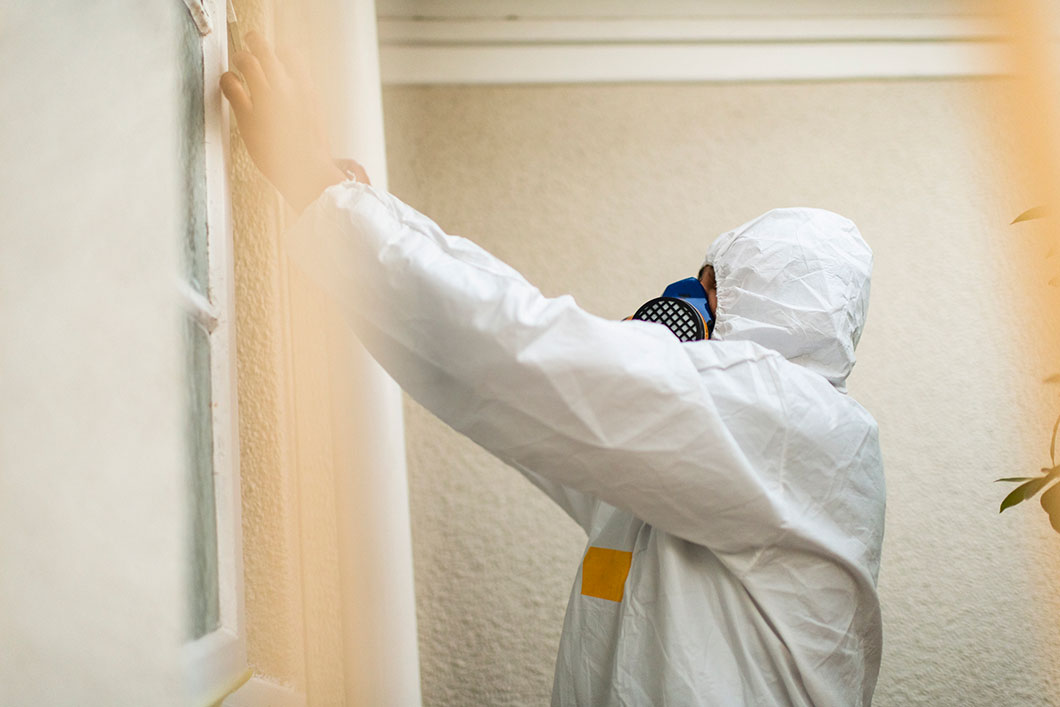
Every year, Asbestos Awareness Week (1st–7th April) focuses attention on one of the most persistent and deadly workplace health risks. Asbestos was banned in 1999, but it is still present in an estimated 300,000 nondomestic buildings. Exposure to this hazardous substance continues to cause around 5,000 deaths annually from conditions such as mesothelioma and asbestos-related lung cancer.
If your business is sited in an older building or if your work involves managing such properties, there is an urgent need to take asbestos seriously, reduce risk and protect your workers.
A major risk
Asbestos can be found in insulation, ceiling tiles, pipe lagging, textured coatings, cement products and other building materials. If it is disturbed, it can release microscopic fibres that can be inhaled and lodge in the lungs for decades. Inconsistent management practices and low awareness among smaller businesses and tradespeople still continue to put thousands at risk.
What the law requires
Under the Control of Asbestos Regulations 2012 (CAR 2012) – the main legislation governing asbestos – those responsible for nondomestic premises must manage asbestos risks proactively. Regulation 4 sets out the legal “duty to manage”.
The dutyholder may be the building owner, landlord, employer, managing agent or anyone with responsibility for maintenance or repair. The duty covers all nondomestic buildings and the common parts of multioccupancy residential buildings.
The legal requirements include:
- Identify asbestos-containing materials (ACMs): Dutyholders must take reasonable steps to determine whether asbestos is present, its condition, quantity and location. Always assume that materials contain asbestos unless there is strong evidence that they do not.
- Maintain an asbestos register: This must record ACM locations and condition and be kept up to date.
- Assess and manage the risks: A written asbestos management plan is required, outlining actions to prevent disturbance, emergency arrangements and how responsibilities are assigned. Plans must be reviewed at least annually and more often if there is any significant change in circumstances.
- Provide information: Anyone who might disturb asbestos, including (but not limited to) contractors, maintenance staff and emergency services, must be informed about the location and condition of ACMs.
- Appoint a competent person: Many organisations designate an ‘Appointed Person’ to oversee surveys, inspections and management processes. Training and competence are essential.
If you do not comply with CAR 2012, you could be facing enforcement action, prosecution and significant organisational and reputational risk.
Action points
Asbestos management is not a oneoff exercise but an ongoing responsibility. Pay attention to these actions to protect your business and everyone who works there or visits it.
1. Review or conduct an asbestos survey
Was the building constructed before 2000? If so, it should have an uptodate asbestos management survey carried out by a competent surveyor. If previous surveys exist, check to determine whether they need updating. This may be the case if there have been changes in building use or deterioration of materials. Planned works may also trigger the need for a new assessment.
2. Update and maintain the asbestos register
The register must be easily accessible, regularly reviewed and updated following any repair, removal or inspection activity. Clear, accurate information ensures contractors and staff can work safely.
3. Create or refresh the asbestos management plan
Your plan should detail how risks are controlled, who is responsible and what to do in an emergency. It must also outline monitoring arrangements and communication procedures. Review it at least every 12 months.
4. Train staff and raise awareness
Training is vital for anyone likely to encounter asbestos. IOSH has repeatedly emphasised the need for improved awareness and consistency among dutyholders, particularly in smaller businesses.
5. Protect workers and the public during work activities
Before any refurbishment, maintenance or demolition work begins, ensure asbestos information is communicated and risk controls – such as enclosure, PPE or licensed removal – are in place. The goal is always to avoid disturbing ACMs wherever possible.
6. Consider long term strategic planning
Organisations such as IOSH continue to call for a co-ordinated national effort and longterm strategy for asbestos removal and safer building renovation. Businesses should factor asbestos considerations into any future refurbishment, retrofit or decarbonisation projects.
The statistics on asbestos related diseases
Overall mortality
- The UK continues to see around 5,000 asbestos related disease deaths per year, including mesothelioma, lung cancer and asbestosis.
Mesothelioma
- There were 2,218 mesothelioma deaths in Great Britain in 2023. This is slightly lower than the 2,280 deaths in 2022 and lower than the 10 year average (2011–2020) of 2,508 deaths per year.
- Mesothelioma deaths have been broadly stable at over 2,500 per year over the last decade, compared to fewer than 200 per year in the late 1960s.
- Two thirds of all mesothelioma deaths now occur in people aged over 75, with deaths in younger age groups decreasing.
Asbestosis
- In 2023, 497 deaths mentioned asbestosis on the death certificate (excluding those that also mentioned mesothelioma).
Long-term trends & emerging risks
- The UK has one of the highest mesothelioma rates in the world, comparable to Australia and the Netherlands – likely due to extensive past use of blue and brown asbestos.
- Exposure during the post-war building boom (1950s–1980s) has led to a long tail of disease, with peak deaths only now beginning to plateau.
- New analyses indicate that while overall deaths may slowly decline, younger and “non-traditional” victims (e.g., teachers, pupils, public building users) may contribute to a possible “fourth wave” of mortality.
Broader occupational lung disease context
- Asbestos related diseases form part of the 11,000 annual lung disease deaths in Great Britain linked to past workplace exposures