Now September is upon us and the summer holiday period is over, many employers will be looking at getting the team back together and scoping out important and strategic tasks for Q4.
However, there is one health and safety risk that is often overlooked when employees come back from their summer holidays – fatigue.
As an employer, this might seem odd to you; after all, the purpose of a holiday is to let the employee recharge their batteries and enjoy a well-earned rest.
However, not every employee returns refreshed. Long-haul travel, hours behind the steering wheel, disrupted sleep patterns, family commitments, airport delays and the challenge of an often sudden readjustment to work routines can all contribute to fatigue-related workplace risks. This can lead to potential health and safety concerns that can affect productivity, decision-making and, in some cases, lead to serious accidents.
What is fatigue?
The Health and Safety Executive (HSE) defines fatigue as
“a decline in mental and/or physical performance that results from prolonged exertion, sleep loss and/or disruption of the internal clock.”
Fatigue can lead to slower reactions, reduced concentration, memory lapses, decreased awareness and poorer judgement.
Importantly, the HSE recognises fatigue as a workplace hazard that employers must manage in the same way as other health and safety risks.
The post-holiday concentration problem
Many employees find they experience a temporary reduction in focus when returning from leave. There can be a period of readjustment as they reconnect with workloads, priorities and deadlines.
Fatigue exacerbates this challenge. Research highlighted by the HSE shows that tired workers are more likely to experience reduced attention, slower information processing and impaired memory.
In office environments, this may result in:
- mistakes in reports, spreadsheets or financial data;
- poor decision-making;
- missed deadlines or overlooked communications;
- increased cybersecurity risks through human error.
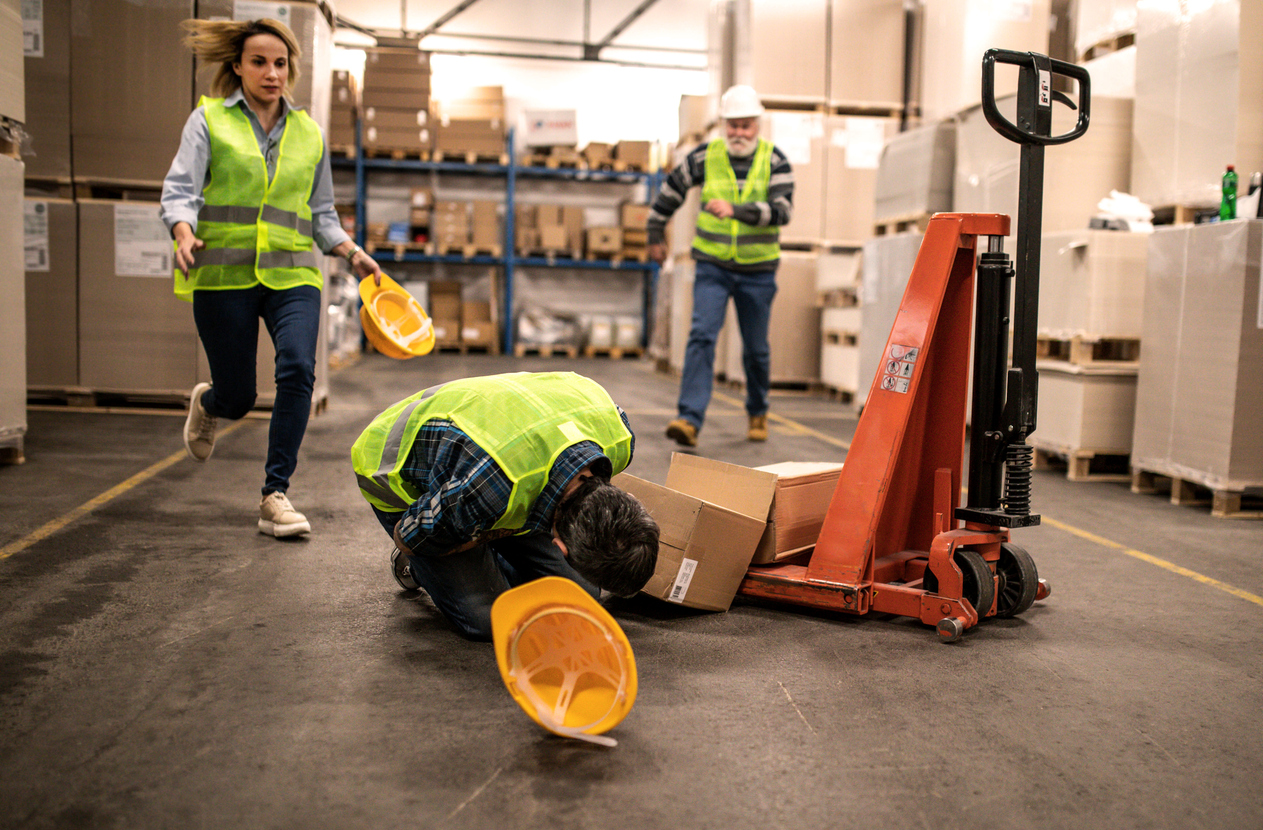
In higher-risk environments such as manufacturing, logistics, construction or engineering, lapses in concentration can have much more serious consequences, particularly where employees operate machinery, vehicles or safety-critical systems. The HSE’s guidance emphasises that human performance issues, including fatigue, can significantly increase the likelihood of errors and accidents.
Travel fatigue and jet lag risks
One of the most significant but frequently overlooked causes of post-holiday fatigue is travel.
Employees returning from overseas holidays may experience disrupted sleep patterns due to jet lag, particularly after travelling across several time zones. Even domestic travel can involve early departures, late arrivals, hours driving (sometimes without adequate rest) and airport queues in noisy environments where it is hard to relax.
The effects can persist for several days after an employee returns to work. Symptoms may include:
- Difficulty concentrating
- Daytime sleepiness
- Reduced alertness
- Slower reaction times
- Mood changes and irritability
For employers, the risk becomes particularly important where employees are expected to drive, operate equipment, make critical decisions or perform safety-sensitive tasks shortly after returning from leave.
The Office of Rail and Road notes that fatigue can present health and safety risks not only to employees themselves but also to others who may be affected by their work activities.
The increased risk of workplace accidents
Fatigue is strongly linked to workplace incidents and near misses. According to HSE guidance, it has been implicated in major industrial accidents and is associated with increased rates of errors, injuries and ill health. Accident rates can increase where workers experience inadequate rest, long working hours or disrupted sleep patterns.
Routine tasks can feel less automatic after a period of absence, increasing the potential for mistakes.
Employers should be particularly aware of this where:
- employees operate vehicles or mobile plant;
- work involves hazardous machinery;
- staff work at height;
- tasks require sustained attention or precision;
- employees are undertaking safety-critical duties.
Driving for work and commuting risks
Fatigue-related driving risks should not be overlooked. Road safety organisations estimate that fatigue may be a contributory factor in up to 20% of road collisions and up to a quarter of fatal or serious collisions. It is said to cost the UK £115 – £240 million per year in terms of work accidents alone.
Employees may be particularly at risk if they return from long-haul flights shortly before resuming work, drive long distances following holidays, experience disrupted sleep due to childcare or school holidays or undertake business travel immediately after returning from leave.
Where driving is part of an employee’s role, employers should remember that health and safety duties extend to occupational road risk. A fatigued employee driving for work may represent a risk not only to themselves but also to colleagues, customers and the wider public.
What does the law say?
UK employers have clear legal duties to protect employee health and safety.
Under the Health and Safety at Work etc. Act 1974, employers must ensure, so far as is reasonably practicable, the health, safety and welfare of employees. This duty extends to workplace systems, supervision and the management of foreseeable risks, including fatigue.
The Management of Health and Safety at Work Regulations 1999 require employers to carry out suitable and sufficient risk assessments and implement appropriate control measures where risks are identified.
In addition, the Working Time Regulations 1998 set minimum standards for rest breaks, daily and weekly rest periods, annual leave and limits on working time. However, the HSE is clear that compliance with working time rules alone may not be sufficient to manage fatigue risks effectively.
Practical steps for employers
Managing post-holiday fatigue does not require complex interventions. Simple, proactive measures can significantly reduce risk.
1. Allow a readjustment period
Avoid scheduling high-risk work, major audits or critical projects immediately upon an employee’s return where possible.
2. Encourage open reporting
Create a culture where employees feel comfortable raising fatigue concerns without fear of criticism.
3. Review workloads
Returning employees often face overflowing inboxes and immediate pressure to “catch up”. Prioritising workloads can help reduce stress and fatigue.
4. Consider travel effects
Where employees have returned from long-haul travel, consider whether temporary adjustments are necessary, particularly for safety-critical duties.
5. Remind managers of their responsibilities
Line managers should recognise the signs of fatigue as outlined above.
6. Review risk assessments
For organisations with higher-risk activities, fatigue should be explicitly considered within existing health and safety risk assessments.