International Women’s Day, which falls on 8th March, encourages employers to reflect on the progress that’s been made towards gender equality and to combat the barriers that still hold women back at work.
A significant development this year is the recognition by the Employment Rights Act 2025 of menopause as a workplace issue requiring proactive employer action.
Why now?
For years, many employers and their HR departments have informally acknowledged the challenges that menopause poses, making their own arrangements but under no legal obligation to do so.
The Employment Rights Act 2025 updates the situation by including direct reference to menopause in its gender equality measures. The issue has now become a matter of legal compliance.
The cost of menopause for the workplace
Both research and government analysis have highlighted the financial and productivity effect of insufficient menopause support. Estimates suggest menopause‑related workplace exits and absences cost the UK economy £10.5 billion annually.
One government estimate [2024] suggests that menopause costs the economy 14 million working days every year, due to women taking time off due to their symptoms. It’s estimated that half of women aged between 50 and 64 choose to work extra hours to make up for their perceived loss of productivity.
15.5 million women in the UK currently experience perimenopause or menopause and many of them are grappling with symptoms such as anxiety, cognitive difficulties, sleep disruption and hot flushes – all of which can influence performance at work.
What does the Employment Rights Act 2025 say?
Action plans
The Act introduces new duties on the employer including the introduction of Menopause Action Plans, which outline how employers intend to support staff affected by menopause. This requirement will affect all employers with 250 or more employees and form part of wider gender equality action plan reporting. These action plans will be voluntary from 6th April 2026 and will become mandatory sometime in 2027 once regulations are finalised.
These plans must include concrete actions employers are taking – or intend to take – to improve support. Although full details aren’t yet available, it’s believed that they could well include flexible working adjustments, temperature control, uniform adjustments, manager training and wellbeing‑focused initiatives.
Government‑issued guidance for all employers
The requirement for action plans will affect only larger businesses but government guidance will support employers of all sizes.
However, it is crucial to remember that employers already have duties under existing legislation, including health and safety requirements and potential discrimination risks under the Equality Act 2010, where claims relating to menopause may be brought under age, sex or disability. The Act does not create a brand-new claim called ‘menopause discrimination’.
Practical effects on employers – a shift from voluntary to mandatory action
As we mentioned earlier, menopause support has, up till now, been a matter of internal policy choices. The new framework means that it is now becoming a legal obligation and not taking steps to prepare for the new legal requirements could lead to:
- increased tribunal claims referencing menopause as part of a protected characteristic.
- potential reputational damage for failing to support a diverse workforce
- talent loss, as one in ten women has reported leaving work because of menopause symptoms and lack of support.
What you need to do now
1. Review and update existing policies
Although menopause action plans will initially be voluntary, this is not an excuse for complacency. As we’ve seen, this will become mandatory some time in 2027 and you will need to be prepared for this well in advance.
Start looking at your sickness absence policies, flexible working arrangements and performance management processes to make sure that they take into account all menopause‑related needs. Check with your legal advisers if you are unsure about what this will involve.
2. Introduce training and awareness
A policy created at board level is of no use unless managers are fully on board with it. They are, after all, the ones who will be implementing the policy and they will play a crucial role in getting your workplace ready for mandatory action plans. Well-drafted training programmes can give them the confidence they need to have supportive conversations and signpost available adjustments for affected employees.
3. Carry out workplace risk assessments
Under Section 2 of the Health and Safety at Work etc. Act 1974, employers have a duty to ensure health and safety for all employees. For menopausal staff, this may include assessing temperature settings, access to bathrooms, hydration, uniform suitability or environmental triggers.
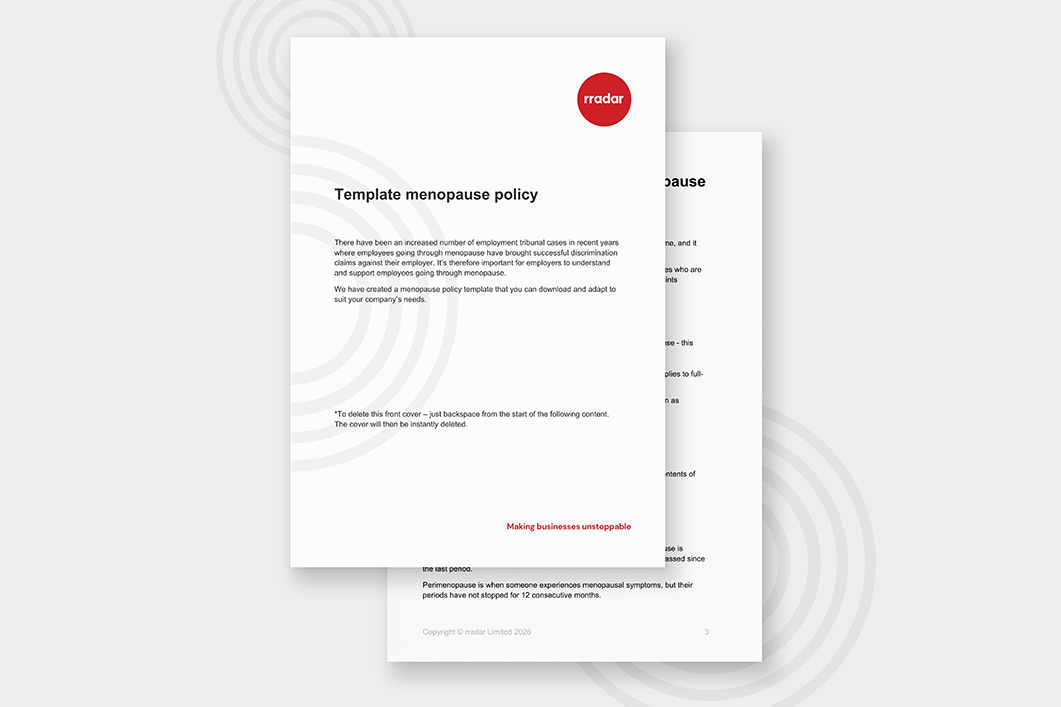
4. Develop a menopause policy
A written policy to accompany action plans is key to ensuring that all employees know what is expected of them, as well as the support that’s available to them from their employer. A consistent approach is encouraged for all employers, regardless of size.
5. Foster an open, supportive culture
Even with a well-drafted policy supported by understanding managers, success is not guaranteed unless the ability of employees to voice concerns and provide input is guaranteed. Creating a menopause‑aware culture enhances retention rates, encourages engagement and promotes wellbeing. It also gives employees the message that their employers takes their concerns seriously and will take action to address any problems that arise.
Why this matters for International Women’s Day
IWD 2026’s global theme, “Rights. Justice. Action. For ALL Women and Girls” focuses on accelerating gender equality – and this legislation represents a landmark moment in employment rights supporting that goal.
Formally recognising menopause as a gendered workplace issue acknowledges an issue that has long affected women’s career progression, financial security and long‑term wellbeing.
If implemented effectively, these new requirements can help remove structural barriers that have pushed many talented women out of the workforce, especially at senior levels and create a workplace environment and culture that treats all employees equally, regardless of sex or age.