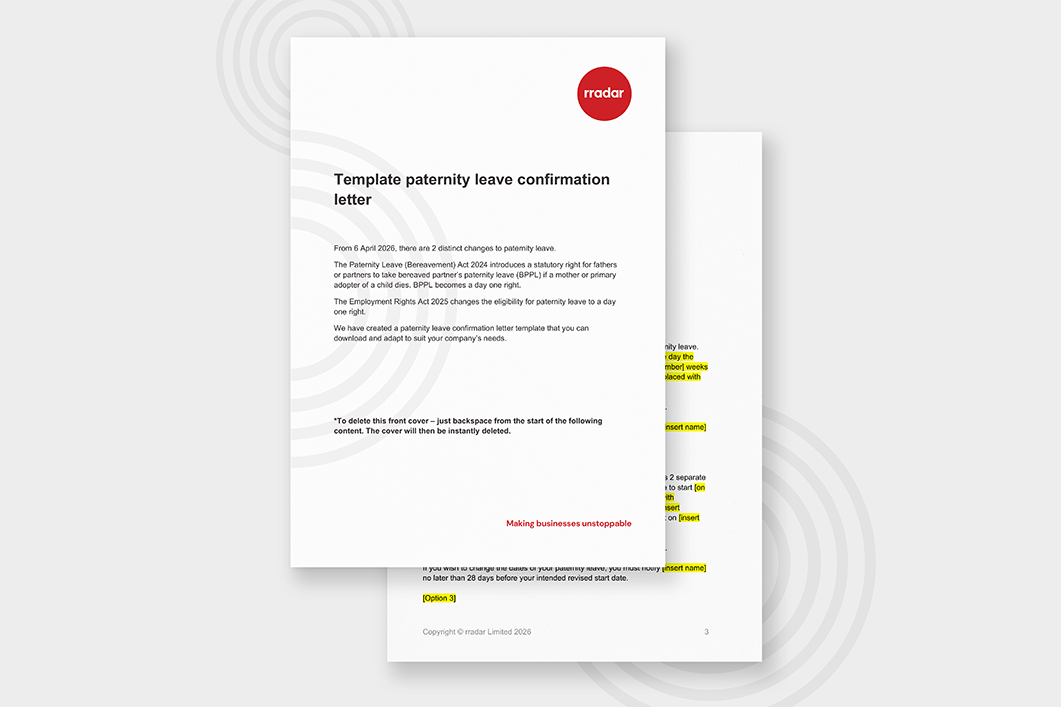
Why a paternity leave confirmation letter matters
From 6 April 2026, important changes to paternity leave come into effect. The Paternity Leave (Bereavement) Act 2024 creates a new statutory right for fathers or partners to take Bereaved Partner’s Paternity Leave (BPPL) if a mother or primary adopter dies, and this becomes a day‑one right. In addition, the Employment Rights Act 2025 makes standard paternity leave a day‑one right, removing previous qualifying service requirements.
These updates mean employers must use clear, compliant communication when confirming employees’ paternity leave arrangements.
Why employers need this template
With new rights and eligibility rules, employers must ensure that their correspondence accurately reflects the changing legal landscape. Using a clear, consistent confirmation letter helps:
- Demonstrate compliance with current legislation
- Reduce administrative errors
- Provide employees with clear and supportive information
- Ensure sensitive communication in bereavement‑related scenarios
How our template helps
Our paternity leave confirmation letter template is fully customisable and designed to support HR teams, managers and administrators. The template covers essential elements such as:
- Confirmation of the employee’s leave dates and eligibility
- Instructions on how to request changes to leave dates
- Options reflecting different leave patterns and circumstances (birth, adoption or bereavement)
- Explanation of pay during paternity leave – statutory or enhanced
- Employee reminders about providing important dates or updates
- Signposting to related policies, such as shared parental leave
It also includes sensitive wording for employees taking leave due to the death of a partner or child, ensuring communication is handled with empathy and care.
Supportive, compliant communication
Using this template helps organisations communicate clearly and respectfully at a significant moment in an employee’s life – whether welcoming a new child or coping with bereavement. It ensures consistency, compliance and a supportive approach across your organisation.