rradar and Sam Fowles (Counsel) of 39 Essex Chambers, successfully represented Baldock Industrial Estate Limited (the Appellant) in an appeal against the issue of an Abatement Notice in a recent case, Baldock Industrial Estate Limited v North Hertfordshire District Council (Stevenage Magistrates Court, 29 September 2025, unreported). The case provides valuable guidance to property owners, occupiers and businesses facing similar challenges when issued with an Abatement Notice by a local authority for a statutory nuisance.
What is a statutory nuisance?
A statutory nuisance occurs where there is a serious, unreasonable interference with the use or enjoyment of property and/or land, or where there is something that harms or is likely to harm health as stated under Section 79 of the Environmental Protection Act 1990. A statutory nuisance can include persistent issues of excessive noise, artificial light, smoke, smells and dust or other contaminants which are a risk of harm.
In this case, the question arose as to who the Local Authority should hold responsible for the nuisance and who the abatement notice should be served on.
What happened?
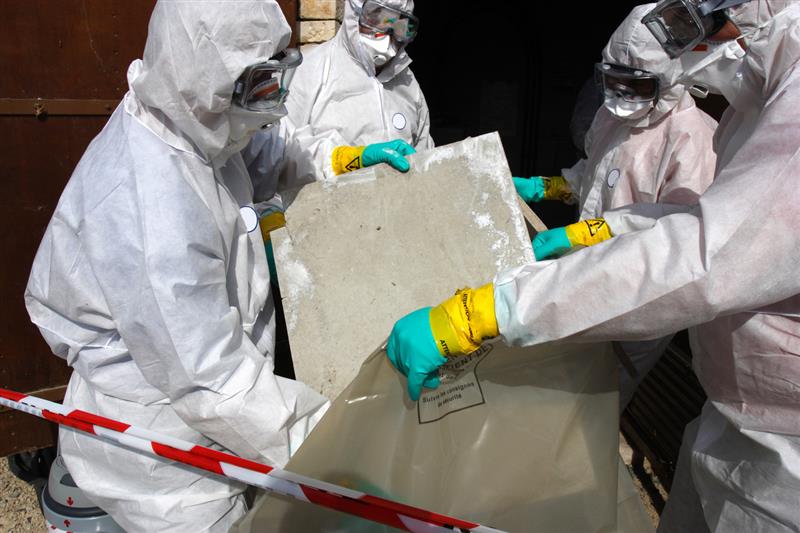
A serious fire at Baldock Industrial Estate occurred in July 2023, severely damaging most of the individual units. As a result, asbestos contained within those units posed a risk to health as it was exposed and spread onto the estate’s common parts. The individual units were held by various different freehold owners and the Appellant owned the common parts surrounding the fire-damaged units (such as the service road). The Appellant was the management company of the estate. The Appellant carried out an extensive clear-up operation of the common parts and secured the site. However, as the fire damaged buildings remained in a state of disrepair, asbestos particles continued to pose a risk of spreading onto the common parts and into the wider area.
Unable to pinpoint the exact source of the asbestos, and faced with a large number of freehold owners of the individual units, the Council served an abatement notice on the Appellant as the owner of the common areas.
The legal issue
It was accepted by the Appellant that the asbestos posed a risk of harm, but they argued that they were not the correct person to be served with the Abatement Notice and that the Council had therefore erred in law.
Section 80 of the Environmental Protection Act 1990 sets out the duty on a local authority to serve an abatement notice where it is satisfied that a statutory nuisance exists, or is likely to occur or re-occur.
Section 80(2) of the Act specifies who may be served with an abatement notice:
- The person responsible for the nuisance
- The owner of premises where the nuisance arises from a structural defect
- The owner or occupier of premises, if the person responsible for the nuisance cannot be found or the nuisance has not yet occurred
The local authority argued the Appellant was either the person responsible for the nuisance or, alternatively, the owner of the land from which it emanated.
Conversely, the Appellant argued that, as the nuisance originated from the fire-damaged buildings (not the common parts), responsibility lay with the individual owners of those buildings and not with the Appellant, who was effectively a victim of the nuisance as asbestos spread onto its land.
The outcome
The court agreed with the Appellant, finding that they did not fall within the categories set out in Section 80 for service of an abatement notice. The appeal therefore succeeded and costs were awarded to the Appellant against the local authority.
The judgment suggests that local authorities should make every effort to identify the source of a nuisance and serve notices on those responsible, before considering issuing abatement notices against owners of neighbouring land.
Good to know
Understand your position
If your business receives an abatement notice, consider whether you are genuinely responsible for the nuisance or simply affected by it.
Gather evidence
Be prepared to demonstrate where the nuisance originated. Clear evidence can be crucial in an appeal.
Know your rights
The law requires councils to target the source of the nuisance. If you are not responsible, you may have grounds to challenge the notice.
Seek expert advice
Early legal advice can help clarify your responsibilities and options.