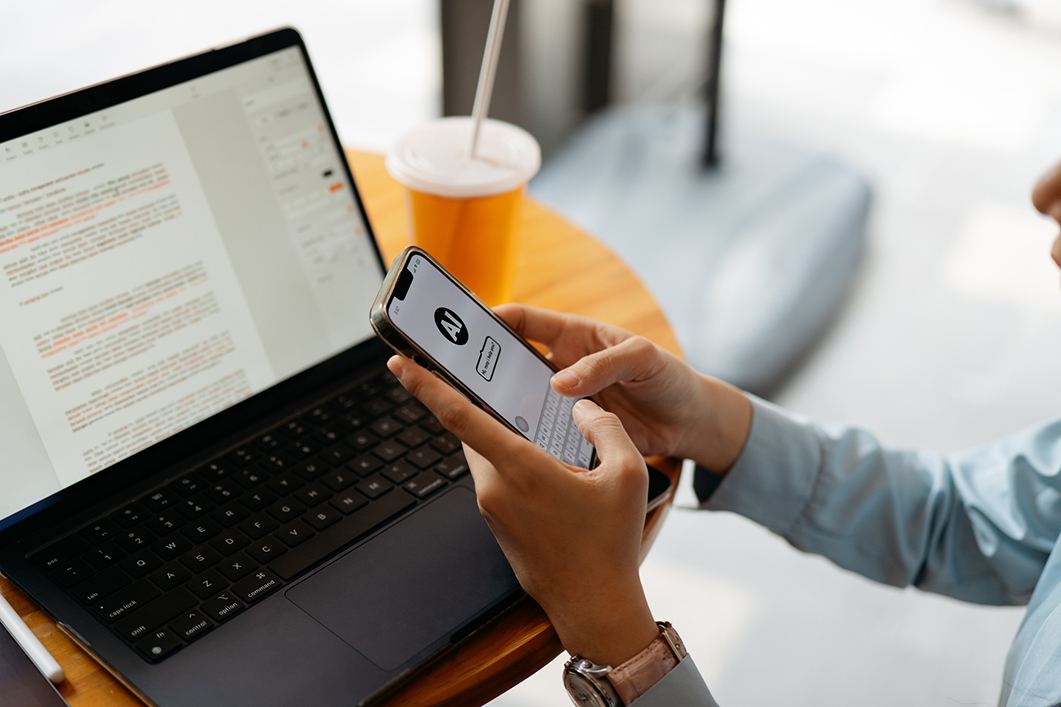
The rapid advance of artificial intelligence (AI) has led to complex questions about intellectual property (IP) rights. As AI technology continues to evolve at which is, to be honest, an astonishing pace, the need for a comprehensive legal system to address these issues becomes increasingly apparent.
What is the legal position?
Copyright is the relevant IP right that protects software. It gives the ‘author’ of the copyright ‘work’ i.e. the software, the exclusive right to do certain, otherwise restricted, acts. In other words, copyright law in its most basic form allows you to stop others from using your work without your permission.
Unlike other jurisdictions, an ‘author’ (who is the first owner and the creator) of a copyright work in English law does not have to be a human. Section 9(3) of the Copyright Designs and Patents Act 1988 deals with the ownership of a computer-generated work. It says:
“The author of a computer-generated work is deemed to be “the person by whom the arrangements necessary for the creation of the work are undertaken”
In relation to AI (e.g. Chat GPT or other large language models) it is unclear how this will work in practice as it has not yet been tested in the English courts and this provision was introduced well before the advent of advanced AI technology.
The government has acknowledged the issue and one of the matters that it looked at in its 2024 consultation on copyright and AI is the proposal to remove this provision from the Copyright Designs and Patents Act 1988.
The question of ownership is further complicated by the way in which AI is commonly used. For example, one party may provide the prompts, another may provide data to input and the result of this collaborative process is that it is very difficult to define the identity of ‘the person by whom the arrangements necessary for the creation of the work’. There could be a number of them.
In addition, there is an originality requirement in English law where copyright is concerned and that suggests that a human that is capable of intellectual creation is necessary for copyright to subsist.
Practically speaking, these sorts of questions can, in part, be answered by a contract. However, a contract will not solve the underlying legal uncertainties about the subsistence of copyright and other IP rights.
At the moment, no one has the answers. Practitioners had hoped that the Getty Images case against Stability AI might have helped to provide answers, but it did not because Getty Images dropped its primary copyright infringement argument. The government recognises the problem and is considering reforms to address the thorny issues. But we are not there yet and we might not be for some time.
So what do you need to take into account if your business uses AI? There are several action points to consider:
1. Ask yourself whether there is an appropriate AI model that suits your business and is more secure e.g. a lot of lawyers use tools like LexisAI.
2. Bear in mind that if you are inputting client data into something like ChatGPT, it is a public tool and you could be in breach of confidentiality obligations and, depending on the information inputted, data laws – so know your compliance issues.
3. Remember that whatever you put into a public AI tool will be available to the public.
4. Do not use AI blindly. Check and re-check its output – it is not an employee, and the ‘human touch’ is important.